Study of co-infections in the respiratory tract
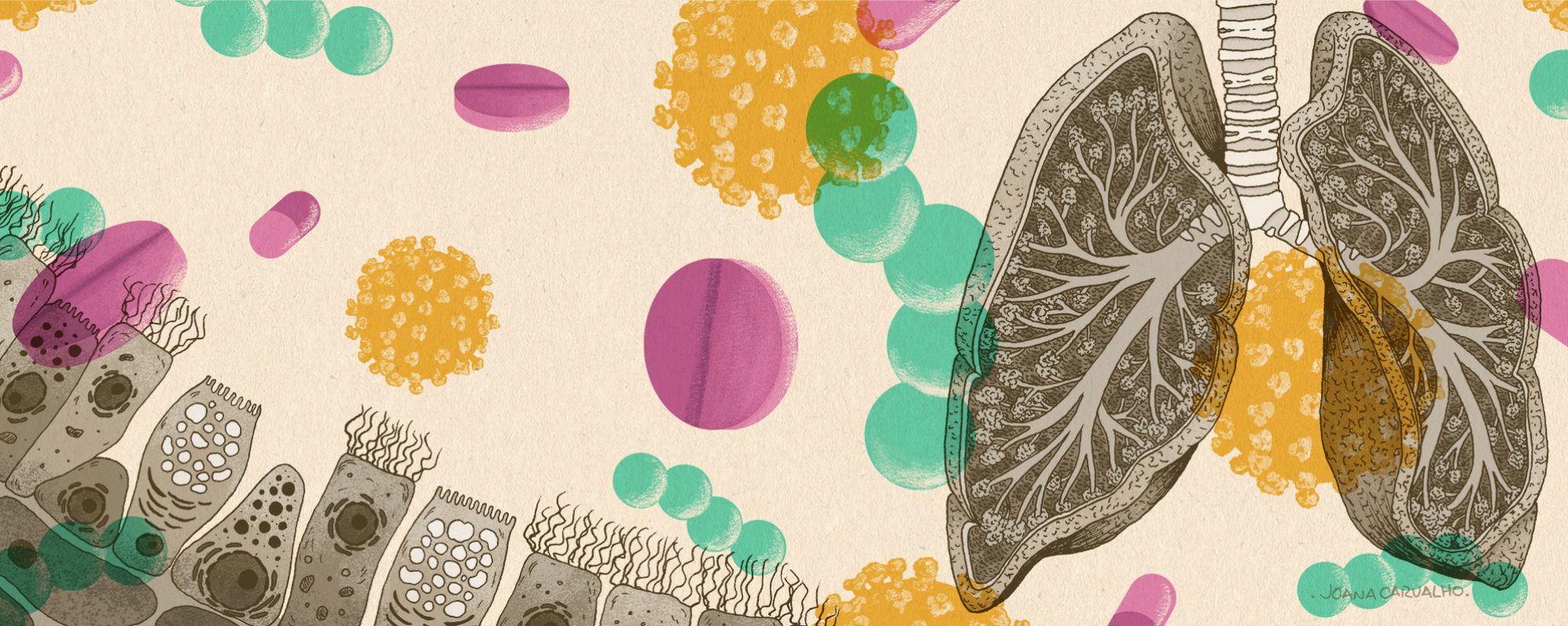
Respiratory tract infections constitute a significant public health problem, with a therapeutic arsenal that remains relatively limited and threatened by the emergence of antiviral and/or antibiotic resistance. Viral-bacterial co-infections are very often associated with the severity of these respiratory infections and have been explored mainly in the context of bacterial superinfections following primary influenza infection. We aim to better understand the complex functional interactions between respiratory pathogens (Viruses/Bacteria/Fungi) and host cells and to shed light on the mechanisms underlying the exacerbation of lung pathology observed during superinfections, for example.

Our strategy is to develop new experimental models to study coinfections/superinfections under the most physiological conditions possible, such as reconstituted human epithelium (HAE). We characterize these models through an integrated approach, combining different microbiological, cellular, and molecular techniques. The new insights gathered will reveal key factors and cellular pathways in the mechanisms of superinfection, which could constitute new biomarkers or therapeutic targets.
See our last review on this topic: Viral and bacterial co-infections in the lungs: dangerous liaisons (Viruses, 2021), HERE
Identification of Host targeted therapies
One of our objective is to identify novel antimicrobial therapies for mixed viral and/or bacterial infections of the respiratory tract in a bedside-to-bench/bench-to-bedside approach, with a specific focus on different infection scenarios between respiratory viruses and multi-resistant bacteria. To mitigate the impact of antimicrobial multi-drug resistance, we propose using and implementing an innovative approach that our research group has previously used with success for respiratory viruses, targeting the host instead of the pathogens. This host-targeted strategy will exploit transcriptional signatures of mixed-infections obtained from both clinical samples and biologically-relevant experimental models, using bio-computational approach to identify and validate drugs that could counteract virus-bacteria co-pathogenesis.
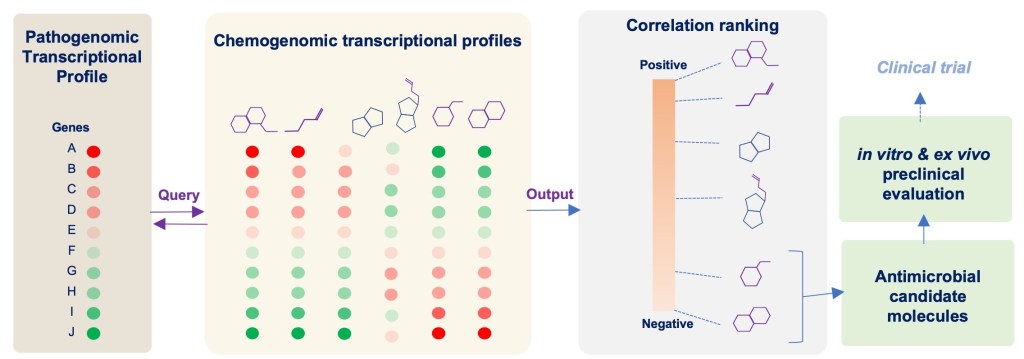
Another complementary objective is to characterize potential companion biomarkers that could be advantageously used in combination of these identified host-targeted therapies and that could be helpful to monitor and predict the outcome of treatment, in parallel of classic microbiological diagnostic tools, in the context of a future clinical evaluation. The data collected during our projects will also contribute to enrich our knowledge of host-pathogens interactions in the context of mixed infections at the level of respiratory tract.
See our last reviews on this topic (Frontiers in Immunology , 2020): HERE
FUNDING
Many thanks to our sponsors and funders, without whom our work would not be possible. The French National Research Agency (ANR) is currently funding the JCJC Ho-TARI and the PRCI ANR-DFG MORIARTY projects, the Air Liquide Foundation is now supporting the COEPIMUS, EPICOV and Idivia-MET-Covid19 projects. Our work has also benefited from the support of the association Vaincre La mucoviscidose, Gérogy Lemarchal and the FINOVI foundation.

TEAM
Olivier Terrier, PI, CNRS Researcher (About me)
Justine Oliva, Postdoctoral researcher
Vanessa Escuret, MCU-PH, Lecturer
Fannie Froment, Assistant Engineer (CNRS Virocrib)
Aurélien Gibeaud, Phd Student 2023-2026 (ANR-DFG MORIARTY)
Charles Terra, PhD student 2022-2025 (Co-supervision Audrey Le Gouellec, TIMC, Grenoble – Fondation Air Liquide project Idivia-MET-Covid19)
Kylian Trepat, PhD student 2022-2025 (Co-supervision Sophie Assant, VirPath, Joint lab HCL/Biomérieux – MESRI Grant)
Laurine Payre, Master 2 student (UCBL)
__
Candidates for a Master-degree internship, a PhD position, or a postdoc are always welcome to apply!
 Respiratory coinfections